Steps to Take to Begin and Complete the Juvenile Expungement Process


1. Obtain an arrest history report from any agency that arrested you and/or the relevant charging and disposition information from the Circuit Clerk.

You will have to pay a fee.

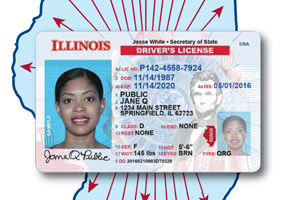
You will have to bring two or more IDs (picture IDs are best).

If you’re under 18, you must go with your parent or legal guardian. The parent or legal guardian must provide proof that he or she is your parent or guardian. The parent or guardian must also bring a valid picture ID.


2. Fill out court forms called a “Petition,” a “Notice” and an “Order” to ask that your records be expunged and file the petition with the Circuit Court in the County in which you were arrested. Forms may be obtained by going to, or calling, the Clerk of the Circuit Court's office in the county where you were arrested, or by contacting the State Appellate Defender's Expungement Unit:

Springfield Office:

Office of the State Appellate Defender
Attn: Expungement Unit
P.O. Box 5240
Springfield, IL. 62705-5240
1(866)431-4907 (toll-free)

Email: Expungement.Springfield@osad.state.il.us
  Chicago Office:

Office of the State Appellate Defender
Attn: Expungement Unit
203 N. LaSalle Street, 24th Floor
Chicago IL 60601
1(866)787-1776 (toll-free)

Email: Expungement.Chicago@osad.state.il.us


Our website: http://www.state.il.us/defender/exp.html


3. Decide which of the two petition forms to use. Generally, if your case only involved an arrest or supervision and you were never on probation, you should use the “Category 1" Petition. If your case involved probation, you should use the “Category 2" Petition.

Click here to see what the completed “Category 1" and “Category 2" petitions should look like.

If you are unsure which form you need to use, call the State Appellate Defender’s toll-free number at (866) 431-4907. You need to file a separate petition for each arrest listed on your arrest history report.

4. Fill out the following portions of the “Notice”:

Your name, case number, the address of the arresting agency, the address of the State’s Attorney and your own address.

LEAVE THE REST OF THE NOTICE BLANK. Click here to see what the completed “Notice” should look like.

5. Fill out the following portions of the “Order”:

Your name, your date of birth (DOB), case number, the name of the arresting agency/agencies.

LEAVE THE REST OF THE ORDER BLANK. Click here to see what the completed “Order” should look like.


6. Bring your completed Petition, Notice and Order to the Clerk of the Circuit Court’s office in the county where you were arrested. You will have to pay a fee to the Clerk when you file your petition. If you cannot afford the fee, then you must complete and file the fee waiver application.

Be certain to ask the clerk when your case will get set for a hearing. Some jurisdictions will set your case for a hearing right away. Others will wait to see if any objection to your Petition is filed.


7. The Clerk’s office will send notice of your petition to the Illinois State Police, the Prosecutor assigned to your case and the agency that arrested you. They have up to 45 days to object to your petition. After you file your petition, you need to notify the Clerk any time you move or change your mailing address by filling out a change of address form. You can get a change of address form from the Clerk’s office.


8. After 45 days contact the Clerk’s office to determine the status of your petition.

Unless the State’s Attorney or prosecutor, the Illinois State Police or the arresting agency objects to your petition within 45 days, the court may grant your petition and expunge your record.


9. If there is an objection to your petition, the Clerk will schedule a hearing. If the Clerk schedules a hearing for your expungement case, you are required to attend. If there is no objection, the court may or may not hold a hearing on your case.

In either case, you need to wear business clothes to the hearing. Men should wear slacks, a tie and a jacket. Women should wear dress pants, a skirt or a dress.

10. If the court grants your expungement request, you must pay the Clerk a fee for the Court, local police, and Illinois State Police to expunge your records. If you cannot pay the fees, you must ask the Court to waive them.


11. The Clerk will forward a certified copy of the expungement order, along with the fees that you paid, to the Illinois State Police and to the arresting agency (such as the local police department). You should contact the Illinois State Police and the arresting agency to be sure that they have received the order and fees.

12. In several weeks, the Illinois State Police will send you and the Clerk a letter confirming your expungement.


CLICK ON EACH OF THE APPROPRIATE BLANK FORMS

CATEGORY 1 PETITION

CATEGORY 2 PETITION

NOTICE

ORDER